A stroke happens when blood stops reaching part of your brain, either because a blood vessel gets blocked or because one bursts. Without that blood supply, brain cells start dying within minutes. That’s the short answer. The longer answer, the one that actually matters if you’re trying to protect yourself or someone you love, involves understanding exactly which blockages, ruptures, and hidden conditions can trigger the event in the first place.
Most articles on this topic stop at “high blood pressure and smoking.” That’s true, but it’s incomplete. Strokes can be caused by a blood clot that traveled from your heart, an artery that tore after a chiropractic adjustment gone wrong, a hormonal shift during pregnancy, or, in about a quarter to a third of cases, something doctors never manage to pin down at all. This guide walks through every major cause, organized by stroke type, so you can see exactly where the risk actually comes from.
What Causes a Stroke?
A stroke is caused by an interruption in blood flow to the brain. This happens in one of two ways. An ischemic stroke, the most common type, occurs when a blood clot or fatty plaque blocks an artery feeding the brain. A hemorrhagic stroke occurs when a weakened or damaged blood vessel ruptures and bleeds into surrounding brain tissue. Both cut off oxygen and nutrients to brain cells, and both are medical emergencies that require immediate treatment.
The Two Main Types of Stroke (And Why the Distinction Matters)
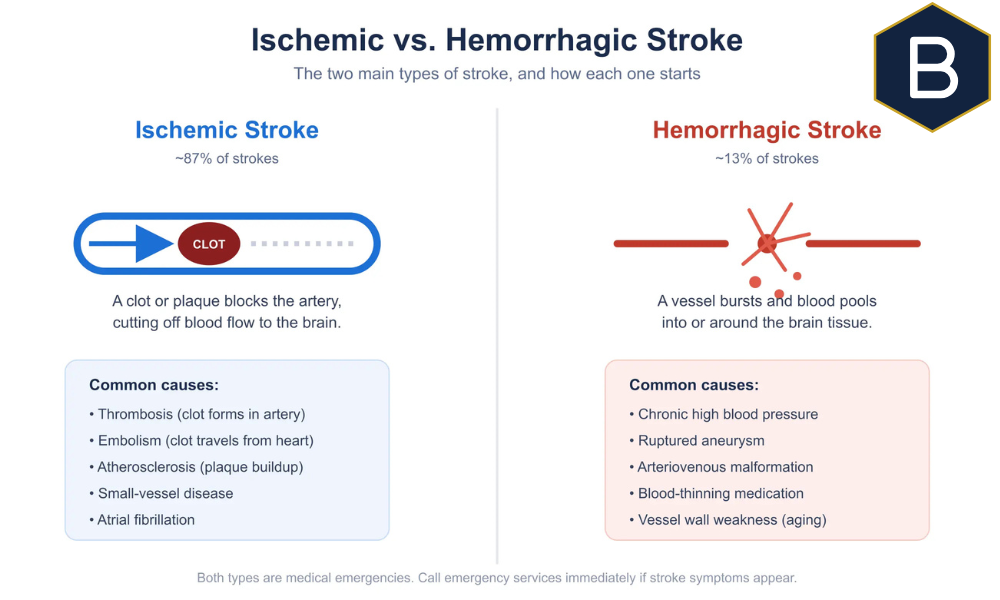
Every stroke falls into one of two broad categories, and knowing which one you’re dealing with changes everything about treatment. A clot-busting drug that saves someone having an ischemic stroke could be fatal if given to someone having a hemorrhagic stroke, since it would only accelerate the bleeding.
Ischemic Stroke: The Blocked Artery
An ischemic stroke happens when something, usually a blood clot or a buildup of fatty plaque, blocks a blood vessel supplying the brain. Picture a garden hose with a wad of debris stuck partway through. Water backs up before the blockage and stops flowing entirely past it. That’s essentially what happens inside an artery.
There are a few distinct mechanisms behind ischemic strokes:
- Thrombotic stroke: A clot forms directly inside an artery in the neck or brain, usually where atherosclerosis (plaque buildup) has already narrowed the passage.
- Embolic stroke: A clot forms somewhere else in the body, often the heart, then travels through the bloodstream and lodges in a smaller brain artery. Atrial fibrillation, an irregular heart rhythm, is one of the most common sources of these traveling clots.
- Large-vessel disease: Significant narrowing in a major artery, such as the carotid artery in the neck, restricts blood flow even before a full blockage forms.
- Small-vessel disease: Damage to the brain’s tiniest blood vessels, often tied to long-term high blood pressure or diabetes, leads to small, deep strokes sometimes called lacunar strokes.
Hemorrhagic Stroke: The Ruptured Vessel
A hemorrhagic stroke occurs when a blood vessel in or around the brain bursts. Blood then pools in the surrounding tissue, and the pressure from that pooled blood damages brain cells on top of the oxygen loss.
Two main patterns show up here:
- Intracerebral hemorrhage: A blood vessel ruptures inside the brain itself, most often due to chronically high blood pressure weakening the vessel wall over years.
- Subarachnoid hemorrhage: Bleeding occurs in the space between the brain and the tissue covering it, frequently caused by a burst aneurysm, a weak, balloon-like bulge in an artery wall.
Hemorrhagic strokes make up a smaller share of total strokes than ischemic ones, but they tend to carry a higher risk of death, largely because the bleeding and pressure buildup can escalate quickly.
The Lesser-Known Causes Most Articles Skip
Blood pressure and cholesterol get most of the attention, and for good reason, but they’re far from the only culprits. If you or someone you know had a stroke and none of the “usual suspects” applied, one of these might be the missing piece.
- Arterial dissection: A tear in the inner lining of an artery wall, sometimes triggered by neck trauma, a car accident, or even a forceful chiropractic neck adjustment, can lead to clot formation right at the tear site. This is a disproportionately common cause of stroke in younger, otherwise healthy adults.
- Patent foramen ovale (PFO): A small hole between the heart’s upper chambers that should close after birth but sometimes doesn’t. It can let a clot bypass the lungs’ natural filtering and travel straight to the brain.
- Vasculitis: Inflammation of the blood vessels, sometimes triggered by autoimmune conditions or infections, can narrow or damage arteries enough to trigger a stroke.
- Hypercoagulable disorders: Genetic or acquired conditions that make blood clot too easily, including certain pregnancy-related changes, some cancers, and inherited clotting disorders.
- Drug-induced strokes: Stimulants like cocaine and amphetamines can spike blood pressure suddenly and constrict blood vessels, and both mechanisms can trigger a stroke even in someone with no other risk factors.
- Genetic small-vessel diseases: Rare inherited conditions can damage the brain’s small blood vessels over time, leading to strokes at an unusually young age, sometimes with a family history of similar events.
- Sex-specific triggers: Pregnancy, preeclampsia, oral contraceptive use, and hormone replacement therapy all shift clotting risk in ways that are specific to women and often left out of general stroke content entirely.
Cryptogenic Stroke: When Doctors Can’t Find a Cause
Here’s something that surprises a lot of people: in a substantial share of ischemic strokes, roughly a quarter to a third by some clinical estimates, doctors never identify a definitive cause, even after a full workup. This is called a cryptogenic stroke.
That doesn’t mean there’s no cause, only that it wasn’t found. Some cryptogenic strokes are later traced back to intermittent atrial fibrillation that wasn’t caught on a standard heart monitor, or to a PFO that wasn’t tested for. Others may involve a hypercoagulable state that standard blood work doesn’t flag. If you or a family member received this diagnosis, it’s worth asking your care team about extended heart-rhythm monitoring and a hypercoagulability workup, since these are the two most common places a hidden cause eventually surfaces.
Risk Factors: Controllable vs. Uncontrollable
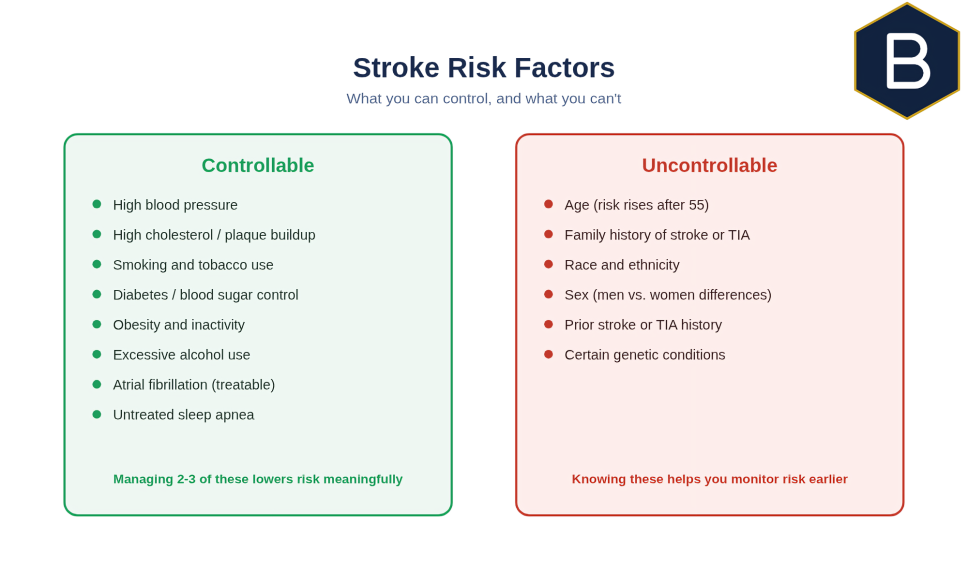
Not every risk factor is something you can change, but the ones you can control tend to have an outsized effect on your overall risk. Managing even two or three of the items below meaningfully lowers your odds.
Controllable risk factors:
- High blood pressure (widely considered the single biggest modifiable risk factor)
- High cholesterol and plaque buildup in the arteries
- Smoking and tobacco use
- Diabetes or poorly controlled blood sugar
- Obesity and physical inactivity
- Excessive alcohol consumption
- Atrial fibrillation and other treatable heart conditions
- Untreated sleep apnea
Uncontrollable risk factors:
- Age (risk rises significantly after 55)
- Family history of stroke or TIA
- Race and ethnicity (certain populations carry statistically higher risk)
- Sex (men have a somewhat higher overall lifetime risk, though women who have strokes are more likely to die from them)
- A personal history of a prior stroke or TIA
Someone in their 40s with well-controlled blood pressure and no family history is working from a very different baseline than someone in their 60s with diabetes and a parent who had a stroke. That’s normal. The point of this list isn’t to scare you into thinking every factor applies equally to everyone, it’s to help you spot which levers are actually yours to pull.
Can Stress, Dehydration, or COVID-19 Cause a Stroke?
These questions come up constantly, and the honest answer is nuanced.
Can stress cause a stroke? Chronic stress doesn’t directly rupture a blood vessel, but it contributes indirectly. Sustained stress tends to raise blood pressure, disrupt sleep, and push people toward smoking, overeating, or drinking more, all of which are established stroke risk factors. So stress is more of an amplifier than a direct cause.
Can dehydration cause a stroke? Severe dehydration thickens the blood, making it more prone to clotting, which can theoretically contribute to an ischemic stroke, particularly in someone who already has other risk factors. It’s rarely the sole cause on its own.
Can COVID-19 cause a stroke? Some infections, including COVID-19, can trigger a temporary hypercoagulable state, an increased tendency for blood to clot. This has been observed in a subset of patients during or shortly after infection, though it remains an uncommon complication rather than a typical outcome.
What Happens in the Brain During a Stroke
The brain uses a disproportionate share of the body’s oxygen and glucose relative to its size, and it has almost no ability to store either. That’s why the “time is brain” phrase gets repeated so often in stroke care. Once blood flow stops, the affected brain cells begin losing function within seconds and start dying within minutes. The longer the blockage or bleeding continues, the more tissue is lost, and the more permanent the resulting disability tends to be.
This is exactly why recognizing symptoms fast matters as much as understanding the underlying cause.
Recognize the Signs: FAST
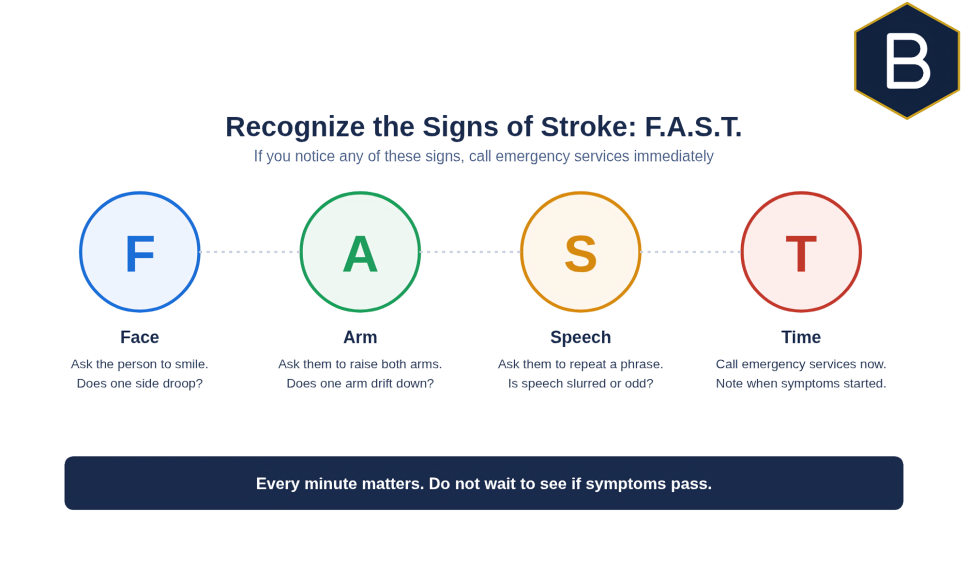
- F: Face drooping. Ask the person to smile. Does one side droop?
- A: Arm weakness. Ask them to raise both arms. Does one drift downward?
- S: Speech difficulty. Is speech slurred, or are they struggling to form words?
- T: Time to call emergency services. If you notice any of these signs, call for emergency help immediately and note the time symptoms started.
Prevention: Matching Action to Cause
Generic advice like “eat better and exercise” is true but not always actionable. Prevention works best when it’s matched to your actual risk profile.
- If your risk centers on high blood pressure, consistent monitoring and medication adherence matter more than any single lifestyle change.
- If atrial fibrillation is present, anticoagulant medication and rhythm monitoring are typically the priority, not just diet.
- If atherosclerosis and high cholesterol are the concern, a combination of dietary changes, exercise, and cholesterol-lowering medication tends to have the most impact.
- If you have a family history or a diagnosed clotting disorder, discussing genetic and hematology screening with a specialist can catch a hidden risk before it becomes an emergency.
None of this replaces a conversation with your own doctor, especially since risk factors rarely show up in isolation. But knowing which cause you’re actually working against makes it much easier to have that conversation productively.
Read More: https://buzzonik.com/anna-popplewell/
FAQs
What are the four main causes of a stroke?
The four most commonly cited contributors are high blood pressure, high cholesterol with plaque buildup, atrial fibrillation, and smoking. Together, these account for a large share of strokes, though dozens of other conditions and triggers can also cause one.
What are the warning signs of a stroke a week before it happens?
Most strokes occur suddenly without a week of warning. However, some people experience a transient ischemic attack (TIA), or mini-stroke, in the days or weeks beforehand. A TIA produces stroke-like symptoms that resolve within minutes to hours and should always be treated as an emergency, since it significantly raises the risk of a full stroke soon after.
Can a stroke be prevented?
A large share of strokes are considered preventable through blood pressure control, not smoking, regular activity, and managing conditions like diabetes and atrial fibrillation. Prevention isn’t guaranteed, since uncontrollable factors like age and genetics still play a role, but modifiable risk factors carry significant weight.
What is the difference between a stroke and a mini-stroke?
A mini-stroke, or TIA, involves the same blockage mechanism as an ischemic stroke, but the blockage clears on its own before permanent damage occurs, so symptoms are temporary. A full stroke causes lasting brain injury. A TIA should still be treated as a medical emergency.
Can high blood pressure cause a stroke?
Yes. Chronically high blood pressure damages and weakens artery walls over time, making them more prone to both blockages (ischemic stroke) and ruptures (hemorrhagic stroke). It’s widely regarded as the single most significant modifiable risk factor.
Can stress or anxiety cause a stroke?
Not directly, but chronic stress raises blood pressure and often drives behaviors, like poor sleep, smoking, or overeating, that increase stroke risk indirectly.
What percentage of strokes are preventable?
Many health professionals estimate that a large majority of strokes, potentially up to 80 to 90 percent by some clinical assessments, are preventable through risk factor management, though exact figures vary across studies and populations.
Can a stroke happen without any warning?
Yes. Many strokes occur suddenly with no preceding symptoms at all, which is part of why recognizing the FAST warning signs in the moment matters so much.
The Bottom Line
A stroke always comes down to one thing: blood flow to the brain gets interrupted, either by a blockage or a rupture. But the paths leading to that moment are far more varied than “high blood pressure and bad luck.” Clots that travel from the heart, tears in an artery wall, hidden clotting disorders, and hormonal shifts can all lead to the same emergency, and roughly a quarter to a third of the time, doctors never find the exact trigger at all.
If you’ve read this far because you’re worried about your own risk or a family member’s, the most useful next step is a direct conversation with a doctor about your specific risk factors, not a generic checklist. And if you or someone nearby ever shows the FAST warning signs, don’t wait to see if it passes. Call emergency services immediately. With stroke, minutes genuinely determine outcomes.